
SANSEN
Complete Advanced Processing Equipment
View more
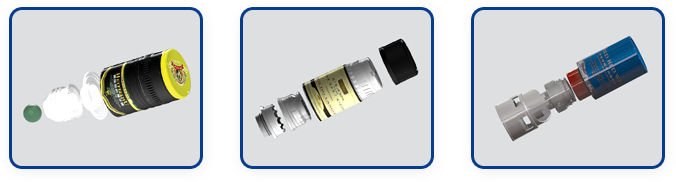
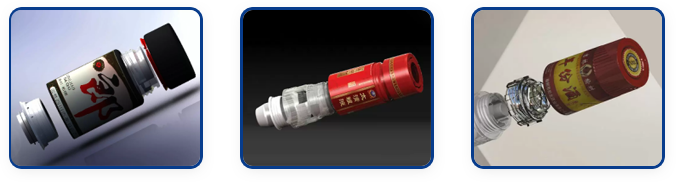
Yes. A ceramic pressure sensor can measure many corrosive liquids when its diaphragm and every other wetted component are compatible with the actual process conditions. The ceramic element alone does not establish suitability: seals, fittings, adhesives, temperature, concentration, and cleaning chemicals can all determine whether the assembly remains reliable.
Consider a pressure measurement point on an acid-transfer line. A sensor may initially provide stable readings, yet a chemically unsuitable seal can swell or harden, eventually causing leakage or measurement problems. Selecting the assembly before the liquid composition and operating limits are defined can turn a straightforward instrument purchase into a piping change or an unplanned replacement.
Start with the complete wetted assembly
A ceramic diaphragm separates the process liquid from the sensing mechanism in many pressure sensors. Certain ceramic materials offer useful chemical resistance and mechanical hardness, making them candidates for aggressive liquids. However, “ceramic” describes a family of materials, not a universal compatibility rating. Composition, manufacturing method, surface condition, and the design of the sensing element can differ between products.
The liquid may also contact an O-ring, a gasket, a metal process connection, a protective coating, or bonding material. Even a small exposed area matters if it becomes the first point of attack. Ask for a wetted-materials list for the exact configuration, including optional seals and fittings, rather than relying on a general description of the sensor family.
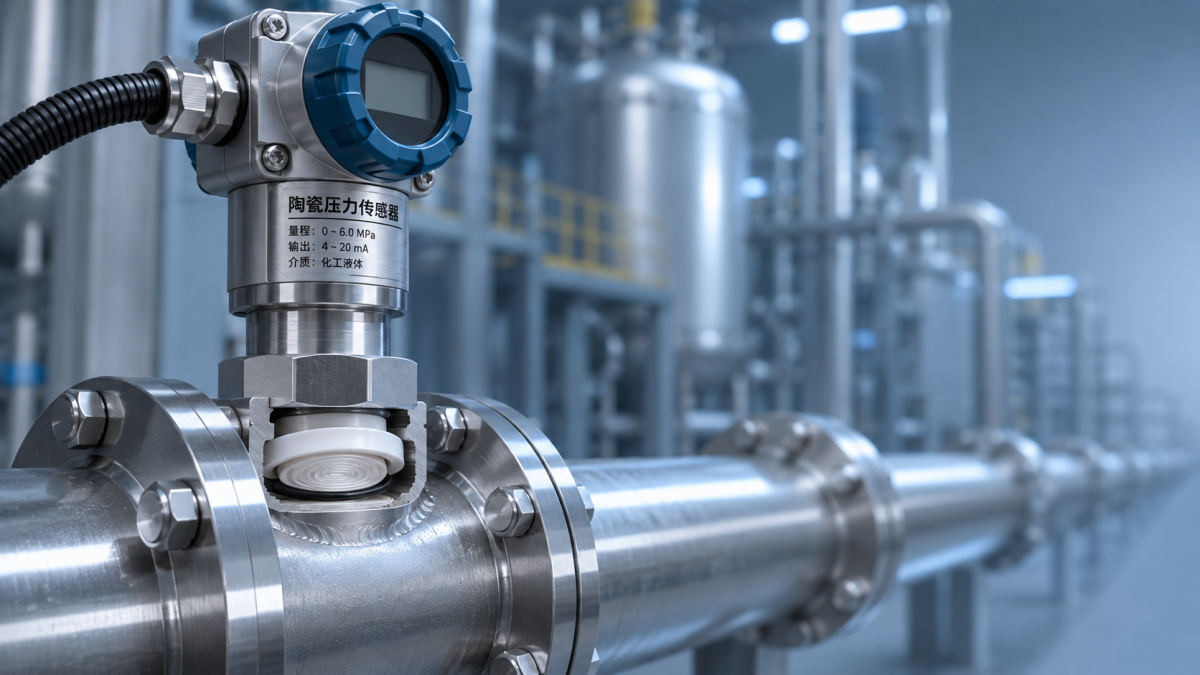
Include indirect exposure in that review. A diaphragm may face the process liquid while its seal is exposed to cleaning solution during a wash cycle. Condensation or leaks can also expose external surfaces to corrosive vapors. Those surfaces may not appear on a standard wetted-parts list, so identify them separately when the installation environment warrants it.
Match resistance to the real liquid, not just its name
A chemical compatibility table is a useful screening tool, but an entry such as “acid resistant” is not enough to approve a sensor. Request or establish the following process details before comparing materials:
- Chemical identity and composition: Identify the principal liquid, additives, contaminants, and any cleaning or neutralizing agents that may reach the sensor.
- Concentration: Record the normal range and credible extremes. Resistance at one concentration should not be assumed at another.
- Temperature: Include normal operation, startup, shutdown, cleaning, and any short temperature excursions.
- Exposure pattern: Distinguish continuous immersion from intermittent contact, stagnant pockets, and repeated wetting and drying.
- Solids and flow: Note suspended particles, crystallization, and high-velocity flow, which can add abrasion or deposits to chemical attack.
Mixtures deserve particular attention. Two substances that appear manageable individually can behave differently when combined, especially if the process temperature or concentration changes. Compatibility information for a pure reagent is a starting point, not evidence that an assembled sensor will survive the actual mixture.
Some media require particular caution. Hydrofluoric acid and fluoride-containing solutions, for example, can attack certain ceramic materials; suitability depends on the specific ceramic and exposure conditions. Strong alkalis, oxidizers, and mixed chemicals also need material-specific evaluation. Do not specify a sensor solely because a different ceramic component has survived elsewhere in the plant.
Choose a measurement arrangement that fits the process
Direct contact
Direct contact can be practical when the diaphragm, seal, and connection materials are suitable for the liquid across the full operating envelope. It avoids adding an isolation assembly, but it leaves the sensor exposed to deposits, pressure spikes, and cleaning agents. Confirm whether the diaphragm is recessed or flush with the process connection: a recessed cavity may trap liquid or solids, while a flush design can be easier to clean in some applications.
Flush does not automatically mean maintenance-free. Deposits may still cover the sensing surface, and aggressive mechanical cleaning can damage it. Check the manufacturer’s permitted cleaning method before specifying scrapers, brushes, or concentrated cleaning chemicals.
Isolation from the process liquid
Where direct contact cannot be justified, an appropriate diaphragm seal or another engineered isolation arrangement may separate the sensor from the corrosive medium. The isolating diaphragm and its connection still need chemical compatibility; isolation moves the material-selection problem rather than eliminating it.
An isolation assembly can also affect measurement performance. Fill-fluid behavior, ambient and process temperature, installation geometry, and any connecting capillary can introduce response or accuracy effects. Evaluate the complete assembly against the required measurement range and response time, rather than assuming that the sensor’s standalone accuracy applies unchanged.
For either arrangement, a transmitter option such as the Current Pressure Transmitter SP50 series can be included in the technical review. Its suitability for a corrosive liquid must be confirmed against the exact configuration, wetted materials, pressure range, and operating conditions; the product name alone does not establish chemical compatibility.
Pressure conditions can decide the sensor design
Chemical resistance is only one part of a workable specification. Define the normal pressure range and the highest and lowest pressures the instrument can encounter, including vacuum where relevant. Pump starts, fast-closing valves, blocked lines, and cleaning cycles can create transient conditions that are not represented by the normal operating pressure.
Check the manufacturer’s limits for rated pressure, overload, and burst pressure, and understand what each limit means for the selected model. Overload capability is not permission to operate continuously above the rated range. A pressure snubber or other protective arrangement may be appropriate for pulsation, but it must also be chemically compatible and may slow the measurement or clog with solids.
Specify the required accuracy at the conditions that matter to the process. Accuracy expressed as a percentage of full scale can translate into a relatively large uncertainty when normal pressure occupies only a small part of the range. Temperature effects, mounting arrangement, and any isolation assembly may add uncertainty beyond the stated reference accuracy. Request enough information to evaluate the measurement chain, not just the headline sensor figure.
Installation details that prevent avoidable exposure
The process connection must match the line mechanically and chemically. Verify thread or flange details, pressure rating, seal placement, and the materials of any adapter. An adapter selected only for dimensional fit can introduce an incompatible metal into the wetted path.
Place the measurement point where it represents the pressure of interest and remains accessible for inspection. A dead leg can retain chemicals after the main line has been flushed; in a crystallizing or sediment-laden process, it can also become blocked. Conversely, a point directly exposed to turbulent flow or impact from solids may experience unnecessary mechanical wear. The best location depends on the liquid, the required measurement, and the available isolation and maintenance provisions.
Plan removal before commissioning. An isolation valve, depressurization method, and a way to drain or flush trapped liquid may be needed so the instrument can be inspected safely. Their suitability belongs in the process design review; the sensor itself does not make a corrosive line safe to open. External cable entries and enclosure materials should also suit washdown and vapor exposure where applicable.
Turn supplier review into an acceptance decision
Provide the supplier with a concise operating envelope rather than a single nominal condition. Include the liquid composition, concentrations, temperature and pressure extremes, cleaning sequence, expected exposure, solids, connection type, and required output and accuracy. Ask the supplier to identify the exact diaphragm, seal, connection, and any exposed bonding materials for the proposed configuration.
Request written clarification of any assumptions. For example, a compatibility statement based on room-temperature continuous immersion may not cover hot intermittent cleaning. Where published information does not address the actual mixture, an application-specific material evaluation or controlled representative exposure test may be appropriate. Such a test should consider the complete wetted assembly and the intended pressure and temperature conditions, not just an isolated ceramic sample.
Before ordering, agree on what will be checked at receipt or commissioning: the supplied material configuration, connection and range, pressure indication against an appropriate reference, and leak tightness using a suitable procedure. Keep the approved material list with the instrument record so that replacement seals, adapters, or instruments are not selected on dimensions alone.
When a reading changes after installation
A drifting or unstable reading does not automatically mean the ceramic diaphragm has been chemically attacked. First verify the process pressure with a suitable independent reference and check the electrical supply, output wiring, and configuration. Then consider process-side causes such as a blocked passage, trapped gas, deposits, pulsation, or temperature changes.
If there is leakage, visible deterioration, or evidence of chemical incompatibility, remove the instrument from service using the site’s isolation and decontamination procedures. Inspect the seal and connection as well as the diaphragm; replacing only the sensing element will not solve an incompatible gasket or fitting. Preserve the failed parts and record the actual liquid, cleaning exposure, and operating conditions so the replacement decision addresses the cause rather than repeating the original specification.
Product Categories
Contact Us
Send us a message
First class quality service and professional after-sales team.

Get in Touch
*We respect your confidentiality and all information are protected.
By clicking 'Allow All', you agree to the storage of cookies on your device to enhance site navigation, analyze site usage and assist with our marketing efforts.