
SANSEN
Complete Advanced Processing Equipment
View more
A pressure transmitter generally needs suitable hazardous-location certification when it is installed where a classified explosive atmosphere may be present and the applicable regulations require certified equipment. The answer depends on the location, the gas or dust involved, the required protection level, and how the transmitter will be installed.
Certification can also matter when the transmitter is mounted outside a classified area but connects electrically to equipment inside it, or when the process connection exposes part of the device to a hazardous atmosphere. For quality control and safety managers, the first step is to establish the installation boundaries and applicable requirements before selecting a model or approving a substitute.
Start with the classified location, not the process name
The presence of a flammable substance somewhere in a facility does not automatically mean every transmitter needs hazardous-location certification. A plant may handle flammable solvents while having both classified and unclassified areas. A transmitter in a ventilated, unclassified utility room can face different requirements from one mounted near a solvent transfer point.
Use the site’s hazardous-area classification documents to identify the area at the transmitter’s installation point. These documents should describe the relevant gas, vapor or dust hazard and the extent of the classified area. In the North American system, locations may be identified by classes and divisions or by zones. Other jurisdictions commonly use zones for gas and dust hazards. The applicable system and equipment approval requirements depend on the jurisdiction and installation.
For gas and vapor locations, Zones 0, 1 and 2 reflect decreasing likelihood or duration of an explosive atmosphere. For combustible dust, Zones 20, 21 and 22 serve a similar purpose. Under the division system, Division 1 generally covers conditions in which a hazard can be present during normal operation or under specified abnormal conditions; Division 2 generally covers conditions in which the hazard is less likely to occur during normal operation.
These descriptions help frame the decision, but they do not replace the site classification. A label such as “solvent area” or “dusty room” is too broad to establish which equipment marking is acceptable. The installation designer must use the formal classification and the rules applicable to that location.
Consider where each part of the instrument is exposed
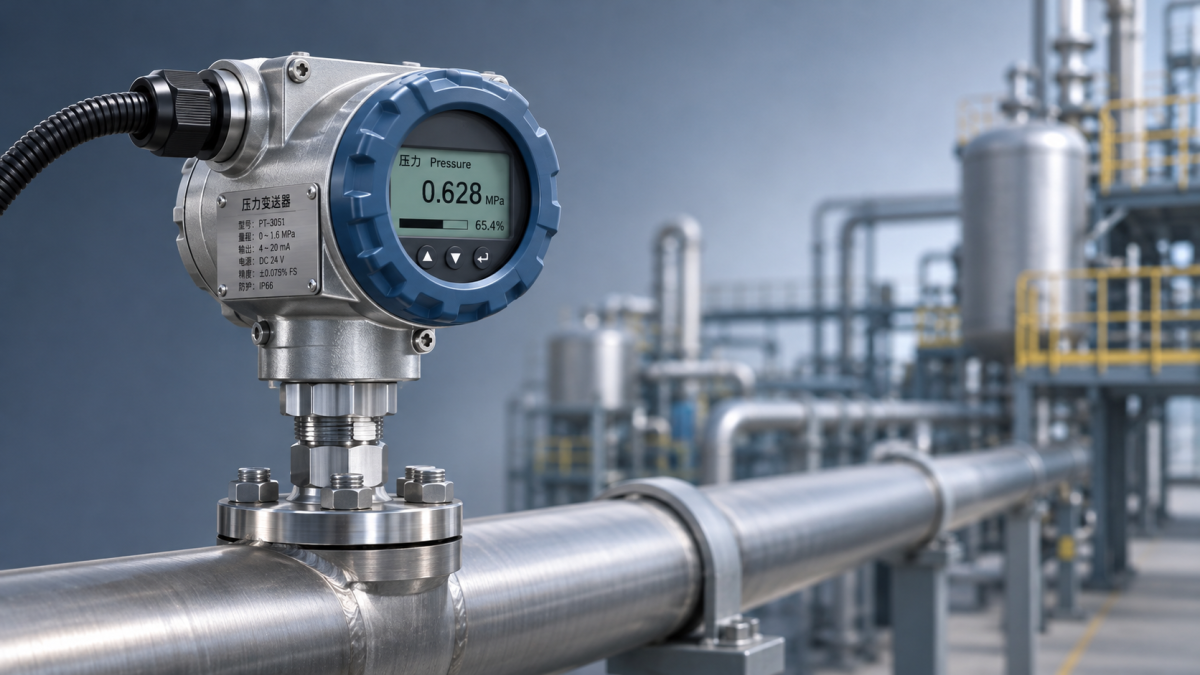
A pressure transmitter can cross an area boundary. Its housing may be outside a vessel while its diaphragm or process connection is exposed to the atmosphere inside. An impulse line can also connect the transmitter to a process containing flammable material. The external location alone may therefore give an incomplete picture.
Check the classification on both sides of the process boundary, the transmitter’s approved construction, and any conditions associated with its installation. The fact that a process contains a flammable liquid does not, by itself, prove that an explosive atmosphere exists inside the equipment; temperature, vapor concentration, oxygen availability and the site’s classification basis all matter.
Remote-mounted displays, cable junctions, barriers and power supplies also need attention. Each component should be assessed for the area where it is installed and for its role in the complete circuit.
“Explosion-proof” is only one way to protect the installation
People often use “explosion-proof certification” to mean any approval for use in a hazardous location. In technical documents, however, explosion-proof or flameproof protection is a specific approach. Other protection methods may be suitable for a pressure transmitter, depending on the classification and installation rules.
An intrinsically safe transmitter is not automatically suitable because a barrier appears somewhere in the control cabinet. The transmitter, associated apparatus, wiring and installation must form an acceptable system. Likewise, an enclosure described as rugged, weatherproof or high-ingress-protection does not establish suitability for a hazardous location.
The choice affects procurement as well as installation. A flameproof arrangement may require particular entries, fittings or seals; an intrinsically safe arrangement requires compatible circuit design and documentation. Selecting the protection method early helps avoid buying a transmitter that cannot be integrated into the planned wiring or approved installation.
Match the approval to the actual hazard
Once the site classification and protection approach are known, compare them with the exact transmitter configuration. A certificate or marking that applies to one version of a product does not necessarily cover every electrical output, housing, process connection or accessory in the same series.
For example, a buyer reviewing the PSI Pressure Transmitter SP160 series for a classified installation should request the hazardous-location documentation for the specific proposed configuration. The series name alone does not establish that a particular unit has the required approval.
The review should cover the following points:
- Jurisdiction and acceptance: Identify the approval or conformity documentation required where the equipment will be installed. ATEX, IECEx and North American hazardous-location approvals have different legal or acceptance contexts; one should not be assumed to replace another without checking local requirements.
- Area and protection level: Verify that the marking permits use in the designated zone or division. For zone-based equipment, check the equipment category or equipment protection level where applicable.
- Gas or dust group: Match the equipment marking to the identified substance group. An approval for a gas atmosphere does not automatically cover combustible dust, and a dust approval must be suitable for the relevant dust group.
- Temperature: Confirm that the permitted maximum surface temperature is appropriate for the hazardous atmosphere and installation conditions. For gas equipment, check the temperature class where applicable. For dust, consider the marked surface temperature and the site’s assessment of dust layers and clouds.
- Operating limits: Check the approved ambient temperature range and any process temperature limits or conditions that affect the equipment’s surface temperature. A transmitter may meet its measurement specification while operating outside its hazardous-location approval conditions.
- Configuration: Match the model code, electrical rating, enclosure, cable entry and accessories on the order to the certificate and approved drawings.
Where a certificate carries special conditions of use, incorporate those conditions into the design and inspection records. They can impose restrictions on installation, environmental exposure or component selection that are not apparent from the short marking on the nameplate.
Read the certificate together with the installation
A valid certificate is evidence that an identified product meets the requirements of a particular assessment. It does not establish that the installed assembly is compliant in every setting. Cable glands, stopping plugs, conduits, seals and other fittings must be appropriate for the protection method and location, as well as compatible with the enclosure.
For intrinsically safe circuits, compare the transmitter’s entity parameters with those of the associated barrier or isolator using the applicable rules and control documentation. Cable capacitance and inductance can affect the permitted circuit. Substituting a different barrier, extending a cable or adding a field indicator can require the system assessment to be repeated.
For flameproof equipment, enclosure integrity and the specified entries matter. A replacement cover, an unsuitable gland or an unapproved modification can undermine the protection concept even if the original transmitter was correctly certified.
When certification may not be required
A transmitter installed entirely in an unclassified location may not need hazardous-location certification solely because it measures pressure in a process that contains a flammable substance. That conclusion depends on the site’s classification, process boundary, equipment construction and applicable rules. Other electrical, pressure equipment or product compliance requirements may still apply.
Similarly, a site may use an alternative protection method rather than an explosion-proof enclosure. The decision should be documented against the classification and installation design, not made from the assumption that every device in a plant needs the same type of protection.
If the area has not yet been classified, treat that as an unresolved design input. Specifying a standard industrial transmitter first and deciding later whether it can be installed in the hazardous area creates a risk of redesign, replacement and delayed commissioning.
Turn the approval into a receiving and change-control check
For quality control, the practical question is whether the unit delivered is the unit the safety assessment permits. Keep the purchase specification linked to the area classification, approved model code, required markings and installation conditions. At receipt, compare the nameplate and accompanying documents with that specification before the transmitter reaches the field.
During installation and commissioning, verify the items that purchasing documents cannot establish on their own: location, wiring, barrier or isolator, cable entries, grounding where required, and any special conditions. Record discrepancies so they are resolved before energization under the site’s procedures.
Apply the same discipline to replacements. A transmitter with the same pressure range and output may have a different protection marking, ambient limit or set of intrinsic safety parameters. Changes to the process, ventilation, hazardous-area classification or connected circuit can also change the basis on which the original device was accepted.
The decision is complete when the site can connect four records: the classification at the installation, the exact equipment approval, the approved circuit or mechanical installation, and the unit actually fitted. That connection gives both safety and quality teams a usable basis for approving the transmitter throughout its service life.
Product Categories
Contact Us
Send us a message
First class quality service and professional after-sales team.

Get in Touch
*We respect your confidentiality and all information are protected.
By clicking 'Allow All', you agree to the storage of cookies on your device to enhance site navigation, analyze site usage and assist with our marketing efforts.